Installing a split system air conditioner in your Melbourne home involves more than wacking up a unit and switching it on. The process requires careful planning, expertise across multiple trades, and understanding how Melbourne’s climate and housing stock affect your installation.
Here’s what you need to know before you decide on an installer and schedule your job.
Split Systems and Melbourne’s “4 Seasons 1 day” Weather
A split system has two parts: the indoor unit that blows air into your room, and the outdoor unit with the compressor and heat exchanger.
They’re perfect for Melbourne because our weather is all over the place. One week you’re sweating through 40°C days, the next you’re freezing your toes off.
Split systems are quiet, energy efficient, and you can put them wherever works best for your space. And the best part, you can heat just the room your in without having to blast the entire house.
Here’s the money part we all care about: a 7.5-star reverse cycle split system (2.65 kW cooling) will save you $2,866.40 over 10 years versus a 2-star system. That’s 37% cheaper to run.
The Site Assessment (What They’re Actually Looking At)
Before anyone drills a hole in your wall, good installers check a bunch of things that affect how the job gets done and what it costs.
Single or double story. Two-story jobs need extra safety gear and take longer.
Can they do a back-to-back install? That’s when the indoor unit goes on one side of an external wall and the outdoor unit sits right outside on the other side. It’s the easiest setup because you don’t need to run cables all through your house.
If back-to-back won’t work (maybe the best spot for your indoor unit is on an internal wall), things get trickier. The cables and refrigerant lines have to snake through your walls and ceiling, which means more complex work.
What’s your house made of? Double brick homes (common in Melbourne’s older suburbs) are tougher to work with. You need proper gear to drill through those thick walls without cracking anything, and the holes need to be sealed properly so you don’t get weather or pests getting in.
Your switchboard. Modern ones? No problem. Old ones might need upgrading to handle the new system safely.
Site access. Can they actually get to where the units need to go? Tight spaces and dodgy access points add time and complexity.
How the Install Actually Works
A proper split system install needs someone who knows electrical work, refrigeration, and often plumbing.
Getting a company with all those trades in-house saves you headaches. You’re not trying to coordinate three different contractors or watching them blame each other when something goes wrong.
Positioning the units. The indoor unit has to be mounted at the right height so air flows properly. The outdoor unit needs room to breathe and space for someone to service it later. Smart installers keep the outdoor unit out of Melbourne’s harsh afternoon sun since that helps efficiency.
Connecting everything. Refrigerant lines, electrical cables, drainage. The refrigerant lines need insulation and zero leaks.
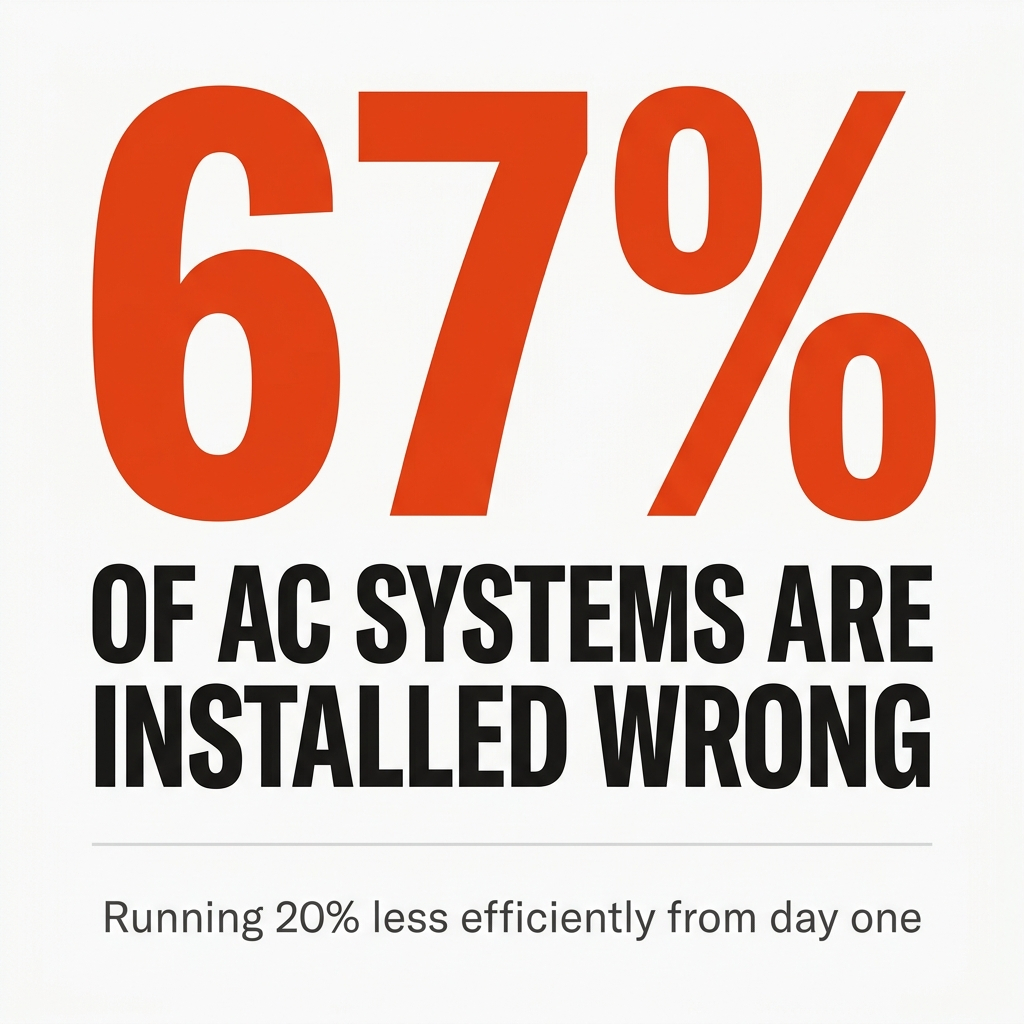
This is where you see the difference between rushed jobs and quality work. Research shows 50 to 67 percent of air conditioners have charging or airflow issues that make them run 20 percent less efficiently.
Electrical work. A licensed electrician sets up dedicated circuit protection and proper earthing. Not just for compliance but because you don’t want electrical fires or a fried system.
Electrical work must comply with Australian standards and local regulations. In Victoria, only licensed electricians can perform this work legally.
Refrigerant charging. They vacuum the air out of the lines and add the exact right amount of refrigerant. You need special equipment and know-how for this.
Cutting corners here kills your system. Undercharge refrigerant by 60 percent and you lose 70 percent cooling capacity and 65 percent efficiency. Field studies show tons of systems are undercharged, usually around 15 percent.
Bad refrigerant charging doesn’t just hurt performance. It wears out your equipment faster and wastes energy.
The VEU Program (Free Money for Upgrades)
The Victorian Energy Upgrades program gives you rebates on energy-efficient split systems.
Since 2009, the VEU program has helped over 2.2 million Victorian households. Between 2022 and 2027, it’ll save 37 million tonnes of greenhouse emissions. That’s like taking 11 million cars off the road for a year.
You need a certified VEU installer to get the rebates. They know the program’s requirements for equipment ratings and install quality.
Good installers do all the paperwork for you and make sure everything meets VEU standards. That cuts your upfront cost big time. Just check they’re actually VEU accredited before you book.
Important: From March 31, 2025, all heating and cooling products installed through VEU must come with a five-year warranty. So VEU installers have to back up their work.
What It’ll Cost You
Price depends on a few things:
-
System capacity and efficiency rating
-
Installation complexity (back-to-back vs. extended cable runs)
-
Your home’s construction type (weatherboard, brick veneer, double brick)
-
Whether electrical upgrades are needed
-
Story level (single vs. double story)
-
Site access challenges
Simple back-to-back install on a single-story weatherboard? That’s your cheapest option. Double-story double brick with cables running everywhere? That costs more because it’s more work.
Good installers tell you one price upfront with everything included—labor, materials, compliance. If a quote looks too cheap, they’re either cutting corners or hiding costs.
The VEU rebate cuts your upfront cost substantially. Swap out old gas heaters or ducted gas for an efficient split system and you could save up to $7,000 over its lifetime.
Factor in the rebate when you’re budgeting, but don’t go with installers who compromise quality just to offer rock-bottom prices.
Picking the Right Installer
You need people who know electrical work, refrigeration, and sometimes carpentry or building.
Find a company with qualified electricians, licensed refrigeration mechanics, and certified VEU installers all in-house instead of subcontractors. One team, full responsibility, start to finish.
Check licensing and insurance. In Victoria, only licensed electricians can do electrical work legally, and refrigeration needs specific qualifications. Ask about equipment and workmanship warranties.
Reviews matter, but ask these questions too:
-
How do you handle double brick installations?
-
What’s your process for ensuring refrigerant lines are leak-free?
-
How do you manage the VEU rebate paperwork?
-
What warranties do you provide on installation workmanship?
-
Who handles any issues that arise after installation?
How they answer tells you if they actually know what they’re doing or just rush through jobs.
Warning: The Essential Services Commission doesn’t mess around with VEU standards. They’ve banned businesses and knocked back millions in certificates for dodgy paperwork. Pick installers with clean records.
Once It’s In: Making It Last
After install, you need to actually use it properly if you want it to handle Melbourne’s weather extremes.
Your installer should show you how everything works and what temperatures to use. Every degree of extra heating or cooling bumps your energy use by 5 to 10 percent.
Clean your filters. Every few weeks when you’re using it heaps. Dirty filters cut efficiency by up to 20 percent.
Get it serviced annually. They’ll check refrigerant, clean coils, make sure everything’s running right. Keeps it working longer and more efficiently.
The EPA reckons residential systems leak 5 to 11 percent of refrigerant per year. Annual checks catch leaks before they trash your performance.
Learn what your system can do. Modern split systems have sleep modes, timers, eco settings that cut your running costs without making you uncomfortable.
Bottom Line
Get the install done right and you’ll have reliable climate control for years.
Installation matters as much as the equipment. HVAC faults waste 15 to 30 percent of total energy. Bad refrigerant charging and airflow problems in new air conditioners waste massive amounts of energy every year.
Avoid this by choosing installers who know what they’re doing. Look for teams with qualified electricians, licensed refrigeration mechanics, and certified VEU installers all under one roof.
Make sure they’re VEU accredited and can handle the rebate paperwork. Ask specific questions about their process, quality standards, and warranties.
Paying a bit more upfront for quality installation is nothing compared to the performance, efficiency, and reliability you get long-term.
Don’t cheap out. You’ll regret it every summer.
Check Your Free VEU Eligibility in 2 Minutes
Ready to find out how much you could save on your split system installation? Check your VEU eligibility now!